Personalized care, from your first consultation · Yongsan-gu, Seoul
en-US

What to Expect During Eye Rejuvenation Recovery
Learn what to expect during Eye Rejuvenation Recovery, including healing stages, downtime, aftercare, and results. Get informed and prepare with confidence.

Understanding Under-Eye Aging

The eye area is subject to a unique combination of structural and skin-level changes as a person ages. Several factors contribute to visible changes around the eyes over time:
- Volume loss in the under-eye area, related to natural changes in fat distribution and bone structure over years, which can create hollowing or shadowing.
- Reduced skin elasticity, leading to fine lines and mild laxity. The skin around the eyes has fewer oil glands and less supportive connective tissue than skin elsewhere on the face, which is part of why changes tend to appear here first.
- Pigmentation changes, which can deepen the appearance of dark circles, influenced by genetics, sun exposure, or the thinness of the skin allowing underlying blood vessels to show through.
- Structural changes in the brow and midface, which affect how the eye area is framed. As the brow gradually descends or the midface loses volume, the eyes can appear more tired even without direct changes to the under-eye skin itself.
- Lifestyle and environmental factors, such as sleep, sun exposure, and hydration, which influence how quickly or visibly these changes appear.
Because these factors often overlap, an accurate assessment of the individual's anatomy is an important first step before any treatment is planned. Two patients with similar complaints of "tired-looking eyes" may have different underlying causes, and treatment that does not account for this is less likely to produce a satisfying result.
Non-Surgical Eye Rejuvenation Treatment Options
Dongahn Central Clinic's approach to eye-area rejuvenation is built on its broader clinical philosophy: achieving lifting and contouring results comparable to surgical intervention, while relying on dermatological techniques that reduce swelling and shorten recovery time.
Dark Circle Rejuvenation
One of the treatments offered for the under-eye area focuses specifically on addressing darkness and volume loss beneath the eyes. This approach is intended to improve the appearance of shadowing and hollowing without the extended healing period associated with surgical fat grafting or lower blepharoplasty. Because under-eye darkness can stem from a mix of pigment, vascular visibility, and volume loss, treatment planning considers which of these factors is most prominent for a given patient.
Eyebrow and Upper Eye Area Lifting
For patients whose concerns relate to brow position rather than the under-eye area itself, targeted lifting treatments can help refresh and elevate the brow, which in turn affects the overall appearance of the eyes. A lowered or asymmetric brow can make the upper eyelid appear heavier or more hooded, so addressing brow position is sometimes a more effective strategy than treating the eyelid or under-eye area directly.
Because these treatments are dermatological rather than surgical, they are generally associated with less tissue trauma, which is a key reason recovery tends to be more manageable than with traditional eyelid or brow surgery.
Who Is a Good Candidate
Non-surgical eye rejuvenation is generally most suitable for patients who:
- Have mild to moderate volume loss or darkness under the eyes
- Want to improve their appearance without extended time off from work or daily activities
- Do not have significant excess skin or structural issues that would typically require surgical correction
- Are in good general health with no active skin infections in the treatment area
- Have realistic expectations about the scope and pace of visible improvement
Patients with more advanced skin laxity, significant excess upper eyelid skin, or herniated fat pads that create visible bulging may find that non-surgical treatments offer only partial improvement, and a physician may discuss whether a surgical option would better address the underlying anatomy.
A thorough consultation is necessary to determine whether a non-surgical approach is appropriate. Dongahn Central Clinic emphasizes individualized assessment rather than applying a single protocol to every patient, since the eye area varies considerably from person to person in both structure and skin quality.
The Treatment Process
While specific steps vary depending on the treatment selected, the general process at Dongahn Central Clinic follows a consistent structure:
- Consultation and assessment — Evaluation of facial anatomy, skin condition, and patient goals, including medical history and any prior eye-area treatments.
- Treatment planning — A customized approach based on the individual's needs, balancing the brow, upper eyelid, and under-eye region.
- Procedure — Performed using techniques intended to minimize bruising and swelling, which may involve targeted injections or energy-based approaches suited to the delicate periorbital anatomy.
- Post-treatment guidance — Aftercare instructions and activities to avoid during the initial recovery window.
Because these are dermatological rather than surgical procedures, most sessions are completed quickly and typically do not require general anesthesia, allowing many patients to return to routine activities shortly after their appointment.
Dr. Seong Han Nam's Approach
Dr. Seong Han Nam holds an M.D. and Ph.D. in Applied Dermatological Anatomy and serves as Director of the Seoul National University Alumni Association, as well as an adjunct professor at Kyungpook National University and Chung-Ang University. This background is directly relevant to eye-area treatments, where precise knowledge of facial structure helps guide safe, natural-looking results.
The periorbital region is one of the more anatomically complex areas of the face, with a close arrangement of muscle, fat compartments, and thin overlying skin. A treatment approach informed by detailed anatomical study is intended to account for this complexity when planning where and how a treatment is applied, supporting both safety and a natural-looking outcome.
At Dongahn Central Clinic, treatment planning is approached with attention to individual anatomy rather than a standardized formula, extending to how expectations are set during consultation so patients understand what a given treatment can and cannot address.
Hospital Strengths
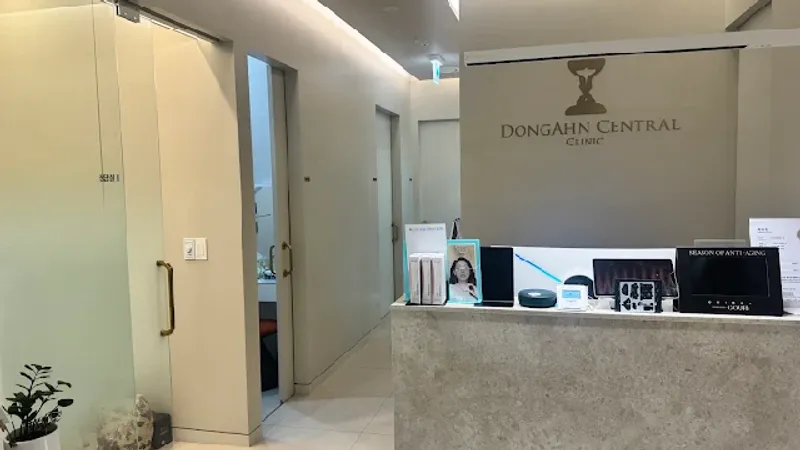
Dongahn Central Clinic, located in Yongsan-gu, Seoul, has operated since 2013 with a consistent focus on non-surgical treatments that aim to achieve results comparable to surgical procedures, centered on reducing swelling and shortening recovery time relative to traditional surgical alternatives.
The clinic maintains a compact clinical team, which supports continuity of care and closer follow-up throughout a patient's treatment journey, allowing the team to become familiar with each patient's history and goals rather than treating each visit as an isolated interaction.
The clinic is also expanding its multilingual outreach to better serve international patients from regions including Japan, Taiwan, and Qatar, reflecting a broader effort to make clear communication and culturally attentive service available to a wider range of patients considering treatment in Seoul.
What to Expect During Recovery
Recovery from non-surgical eye rejuvenation treatments at Dongahn Central Clinic is generally shorter than recovery from surgical alternatives, though individual experiences vary depending on the specific treatment and skin type.
In the first 24–48 hours, mild redness, swelling, or bruising around the treated area is possible. A cold compress as directed, along with avoiding strenuous activity, can help minimize discomfort. Some patients notice minimal visible signs of treatment, while others experience more pronounced swelling depending on skin sensitivity and the technique used.
In the following days, any residual swelling typically continues to subside. Patients are generally advised to avoid rubbing the treated area, direct sun exposure, and strenuous exercise until initial swelling has resolved, and gentle skincare with sun protection can further support healing.
Over the following one to two weeks, most visible signs of treatment typically resolve, and any gradual improvements may continue to become more apparent. Because the eye area heals somewhat differently than other parts of the face, patients are encouraged to be patient rather than expecting immediate final results.
Follow-up care is an important part of the recovery process. Dongahn Central Clinic emphasizes ongoing monitoring after treatment to assess healing, and patients are encouraged to raise any unexpected symptoms with their physician promptly rather than waiting for a scheduled follow-up.
Recovery timelines can differ based on the specific treatment performed, the individual's skin type, and how closely aftercare instructions are followed. Patients should discuss expected recovery details with their physician during consultation, since no two cases are identical.
Safety and Realistic Outcomes
While non-surgical eye rejuvenation can improve the appearance of dark circles, hollowing, or brow position, it is not a substitute for surgical correction in cases involving significant excess skin or structural laxity. Results are generally gradual rather than immediate, and outcomes depend on individual anatomy, skin condition, and adherence to aftercare guidance.
Patients should also be aware that results are typically not permanent in the same way surgical correction may be, and maintenance treatments may be discussed as part of a longer-term care plan depending on the individual's goals.
As with any medical procedure, patients should have a clear, realistic understanding of expected results before proceeding, and should raise any questions about safety, technique, or expected outcomes directly with their physician during consultation.
Conclusion
Eye rejuvenation is a nuanced area of dermatological treatment that benefits from careful anatomical assessment and individualized planning. The periorbital area's delicate structure means that even subtle differences in technique can influence both safety and the naturalness of the outcome. At Dongahn Central Clinic in Yongsan-gu, Seoul, Dr. Seong Han Nam's academic background in dermatological anatomy informs a treatment approach centered on precision and patient-specific care.
For those considering non-surgical options to address under-eye aging or brow-related concerns, a consultation is the appropriate first step. A thorough evaluation, transparent discussion of expected outcomes, and a clear understanding of the recovery process can help patients make an informed decision about whether eye rejuvenation treatment is right for them.
Address: Room 203, 95 Hangang-daero, Yongsan-gu, Seoul Hours: 11:00 AM – 6:00 PM